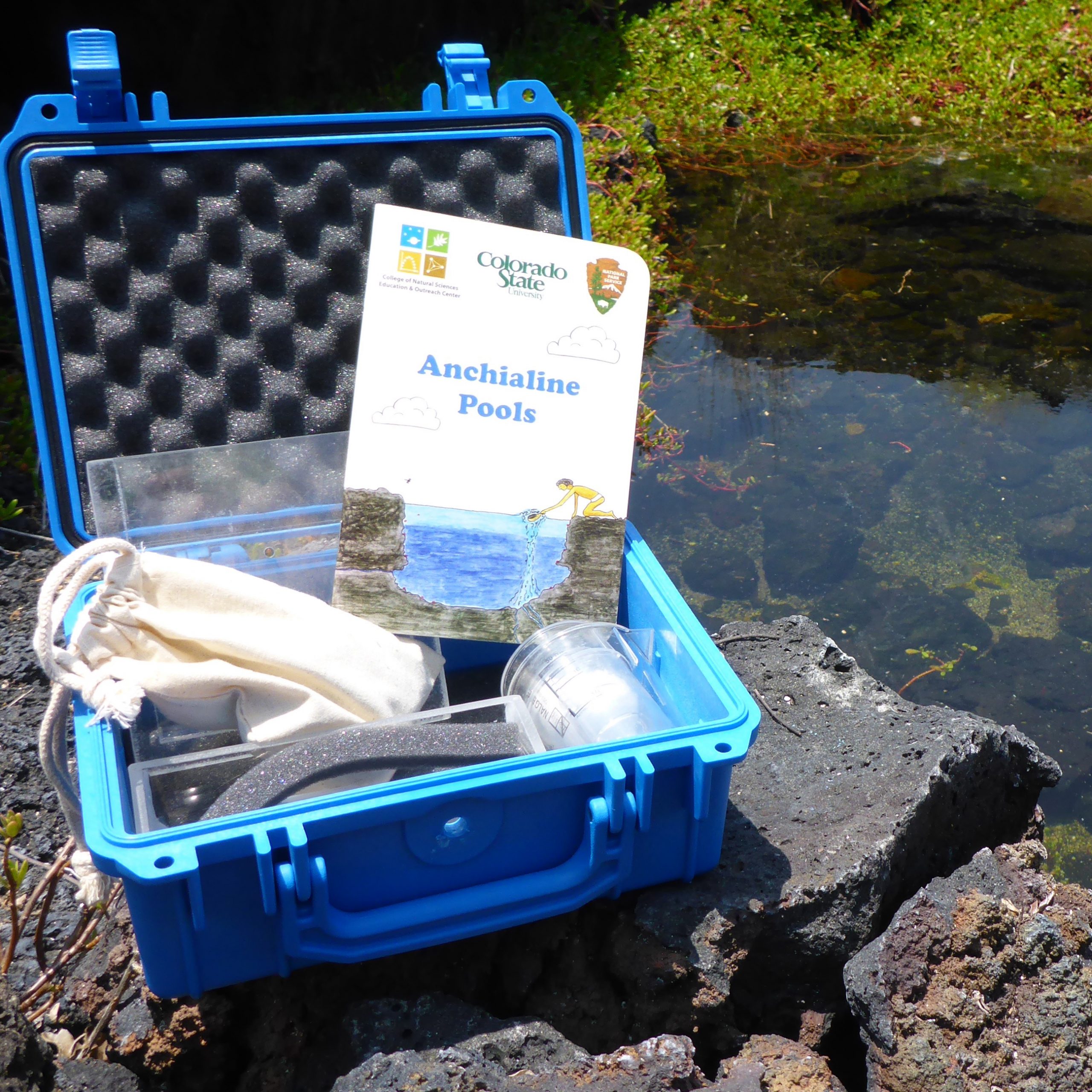
Explore how overuse of groundwater affects culturally significant brackish pools that are unique to the islands of Hawai’i!
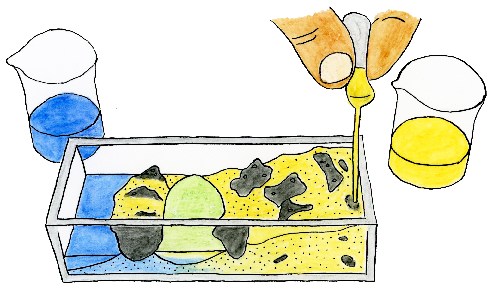
This story takes place in Hawai’i and has implications worldwide. Students build physical models of unique brackish water pools on the Kona coast. Filling the model with fresh water on the mauka (mountain) side and saltwater on the makai (ocean) side, students can test different scenarios, including sea level rise and overuse of groundwater. Several endemic species live in these culturally significant pools and their survival depends on us all.
NGSS Science and Engineering Practices include: 1) developing and using models; 2) analyzing and interpreting data; 3) constructing explanations and designing solutions; 4) obtaining, evaluating and communicating information.
NGSS Crosscutting Concepts include:1) patterns; 2) cause and effect; 3) scale, proportion and quantity; 4) systems and system models; 5) structure and function; 6) stability and change of systems.
NGSS Disciplinary Core Ideas
- 4-ESS2.A: Earth Materials and Systems Rainfall helps to shape this land and affects the types of living things found in a region
- 5-LS2.A: Interdependent Relationships in Ecosystems Organisms can survive only in environments in which their particular needs are met. A healthy ecosystem is one in which multiple species of different types are each able to meet their needs in a relatively stable web of life. Newly introduced species can damage the balance of an ecosystem.
- 5-ESS.C: The Roles of Water in Earth’s Surface Processes Nearly all of Earth’s available water is in the ocean. Most fresh water is in glaciers or underground; only a tiny fraction is in streams, lakes, wetlands and the atmosphere.
- MS-LS2.A: Interdependent Relationships in Ecosystems Organisms and populations of organisms are dependent on their environmental interactions both with other living things and with non-living factors.
- MS-LS2.C: Ecosystem Dynamics, Functioning and Resilience Ecosystems are dynamic in nature; their characteristics can vary over time. Disruptions to any physical or biological component of an ecosystem can lead to shifts in all its populations.
- MS-ESS.C Human Impacts on Earth Systems Human activities have significantly altered the biosphere, sometimes damaging or destroying natural habitats and causing the extinction of other species.
- HS-ESS2.E: Biogeology The many dynamic and delicate feedbacks between the biosphere and other Earth systems cause a continual co-evolution of Earth’s surface and the life that exists on it.
Class Requirements
- 4th grade and up
- Moderate teacher preparation
- One to two class periods
- 30 students or less working in pairs
- Science notebooks
- Sink
- Paper towels
Anchialine Pools STEM Kit Resources
- Anchialine Pools STEM Kit Facilitator’s Guide (complete guide)
- Anchialine Pools STEM Kit Instruction Booklet (for more information, contact Andrew Warnock)
- Science Notebook Template (for use in lieu of Science Notebooks)
- Science Notebook Template (Spanish version)
- Preparing the sand video
- Preparing the colored water video
- Cleaning the sand video
- Disappearing ʻOpae ʻula (red shrimp)
- Kaloko-Honokōhau 3D Paper Model
- Waters of Kāne Dice Game
- Waters of Kāne Clever Catch Ball
- The Waters of Kaloko-Honokōhau Self-Guided Nature Trail Guide
- Electrical Conductivity Backpack
- Schoolyard Water Budget STEM Kit
- Kaloko-Honokōhau Reference Materials
Borrowing Anchialine Pool STEM Kits
Kona, Hawaiʻi Educators should contact the park to make arrangements.
Colorado Educators should contact the NSEOC through the loan application below.
There is no charge to educators who wish to borrow any of our STEM kits. We appreciate applications be submitted at least 2 weeks in advance of the desired use date. The Loan Application Form requires you to confirm your email address before it will be sent to the NSEOC – so once you click submit, check your email (including the junk folder)! You should also get a copy of the form for your records via email, if you don’t, please contact Jordan Conley (jordan.conley@colostate.edu).
- For educators in the immediate area of Fort Collins (i.e.: Greeley, Loveland, Ault, Windsor, Johnstown, etc.), we ask that you select the local pick-up option on the Loan Application Form.
- For educators in Colorado outside of the immediate Fort Collins area, please select the local pick-up option on the Loan Application Form and the kits will be shipped to you.
- Educator Feedback Survey – must be completed after returning kits to the NSEOC and before another kit can be requested