Explore how studying hibernators could help people with osteoporosis!
In this STEM kit, students learn how three different hibernators might hold clues that could one day help people. By measuring the metabolism of a yeast culture at different temperatures, students analyze their own data in the same way Dr. Greg Florant studies how hibernating ground squirrels might adapt to a changing climate. Dr. Seth Donahue’s research collection of bear bone specimens are analyzed by students to demonstrate that these animals have already solved a common problem that humans face as we age.
Science and Engineering Practices include: 1) developing and using models; 2) analyzing and interpreting data; 3) using mathematics and computational thinking; 4) obtaining, evaluating, and communicating information
Crosscutting Concepts include: 1) patterns; 2) cause and effect; 3) systems and system models; 4) structure and function; 5) stability and change of systems
Next Generation Science Standards: Disciplinary Core Ideas
- MS-LS2.A: Interdependent Relationships in Ecosystems Organisms, and populations of organisms, are dependent on their environment interactions both with other living and with non-living factors.
- MS-LS2.C: Ecosystem Dynamics, Function, and Resilience Ecosystems are dynamic in nature; their characteristics can vary over time. Disruptions to any physical or biological component of an ecosystem can lead to shifts in all its populations.
- HS-LS1.C: Organization for Matter and Energy Flow in Organisms Cellular respiration also releases the energy needed to maintain body temperature despite ongoing energy transfer to the surrounding environment.
- HS-LS2.C: Ecosystem Dynamics, Function, and Resilience Anthropogenic changes (induced by human activity) in the environment – including, habitat destruction, pollution, introduction of invasive species, overexploitation, and climate change – can disrupt an ecosystem and threaten the survival of some species.
Class Requirements
- 7th grade and up
- Moderate teacher preparation
- One to two class periods
- 30 students or less working in pairs
- Science notebooks
- Paper towels
- Sink (hot & cold water)
- Ice
Secrets of the Hibernators STEM Kit Resources
- Secrets of the Hibernators STEM Kit Use Instructions (complete teacher guide)
- Science Notebook Template (for use in lieu of Science Notebooks)
- Science Notebook Template (Spanish version)
- Body Mass Graph Template
- Yeast Experiment Table Template
- Bear Bone Photomicrographs
- Secrets of the Hibernators STEM Kit Instruction Booklet
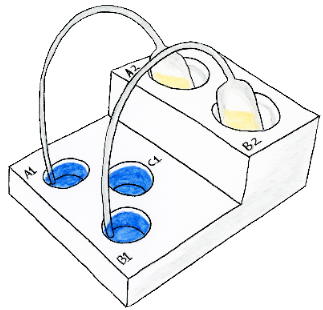
(available upon request – email name and school to Dr. Andrew Warnock) - Viney Apparatus 3D Model (.STL file)
- Trabecular Bone 3D Model
Borrowing Secrets of the Hibernators STEM Kits
There is no charge to educators who wish to borrow any of our STEM kits. We appreciate applications be submitted at least 2 weeks in advance of the desired use date. The Loan Application Form require you to confirm your email address before it will be sent to the NSEOC – so once you click submit, check your email (including the junk folder)! You should also get a copy of the form for your records via email, if you don’t, please contact Jordan Conley (jordan.conley@colostate.edu).
- For educators in the immediate area of Fort Collins (i.e.: Greeley, Loveland, Ault, Windsor, Johnstown, etc.), we ask that you select the local pick-up option on the Loan Application Form.
- For educators in Colorado outside of the immediate Fort Collins area, please select the local pick-up option on the Loan Application Form and the kits will be shipped to you.
- Educator Feedback Survey – must be completed after returning kits to the NSEOC and before another kit can be requested