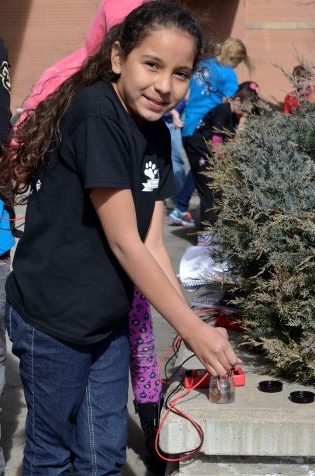
Explore how we systematically test different metals to make a better rechargeable battery!
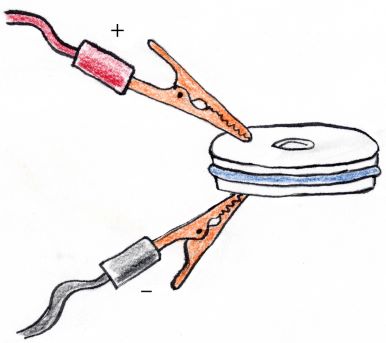
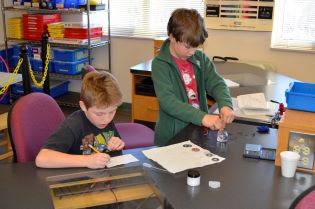
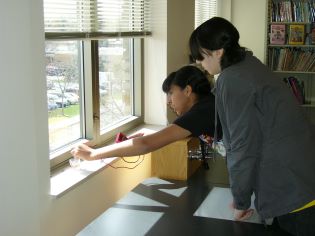
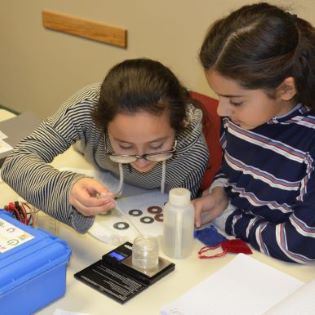
The storyline in this STEM kit takes students through systematic testing of four metals to determine combinations that produce the greatest voltage. As students learn to use a digital balance and multimeter, explore the concept of electricity, and share ideas with their partner on which combination of metals to try, they mimic skills and techniques straight out of Dr. Amy Prieto’s research laboratory at CSU!
Science and Engineering Practices include: 1) planning and carrying out investigations; 2) analyzing and interpreting data 3) using mathematics and computational thinking 4) obtaining, evaluating, and communicating information
Crosscutting Concepts include: 1) patterns; 2) energy and matter in systems 3) structure and function
Next Generation Science Standards: Disciplinary Core Ideas
- 4-PS3.D: Energy in Chemical Processes and Everyday Life The conversion of stored energy into a desired form for practical use.
- 5-PS1.A: Structure and Properties of Matter Measurements of a variety of properties can be used to identify materials.
- MS-PS1.B: Chemical Reactions Some chemical reactions release energy; others store energy.
- MS-ETS1.B: Developing Possible Solutions There are systematic processes for evaluating solutions with respect to how well they meet the criteria and constraints of a problem.
- HS-PS3.A: Definitions of Energy “Electrical energy” may mean energy stored in a battery or energy transmitted by electrical currents.
- HS-PS3.D: Energy in Chemical Processes Solar cells are human-made devices that likewise capture the sun’s energy and produce electrical energy.
Class Requirements
- 4th grade and up
- Moderate teacher preparation
- One to two class periods
- 30 students or less working in pairs
- Science notebooks
- Sink
- Paper towels
Get Energized! STEM Kit Resources
- Get Energized! STEM Kit Use Instructions (complete teacher guide)
- Get Energized! YouTube Tutorial (Part 1 of 2)
- Get Energized! YouTube Tutorial (Part 2 of 2)
- Data Table Template
- Science Notebook Template (for use in lieu of Science Notebooks)
- Science Notebook Template (Spanish version)
- Get Energized! STEM Kit Instruction Booklet
(available upon request – email name and school to Dr. Andrew Warnock) - Energy Institute @ CSU
- Batteries: Electricity through chemical reactions (LibreTexts)
- How Silicon Makes Solar Panels (website)
- Galvanic Corrosion (website)
- Electrochemistry (LibreTexts)
Borrowing Get Energized! STEM Kits
There is no charge to educators who wish to borrow any of our STEM kits. We appreciate applications be submitted at least 2 weeks in advance of the desired use date. The Loan Application Form requires you to confirm your email address before it will be sent to the NSEOC – so once you click submit, check your email (including the junk folder)! You should also get a copy of the form for your records via email, if you don’t, please contact Jordan Conley (jordan.conley@colostate.edu).
- For educators in the immediate area of Fort Collins (i.e.: Greeley, Loveland, Ault, Windsor, Johnstown, etc.), we ask that you select the local pick-up option on the Loan Application Form.
- For educators in Colorado outside of the immediate Fort Collins area, please select the local pick-up option on the Loan Application Form and the kits will be shipped to you.
- Educator Feedback Survey – must be completed after returning kits to the NSEOC and before another kit can be requested
Failure is instructive. The person who really thinks learns quite as much from his failures as from his successes. – John Dewey