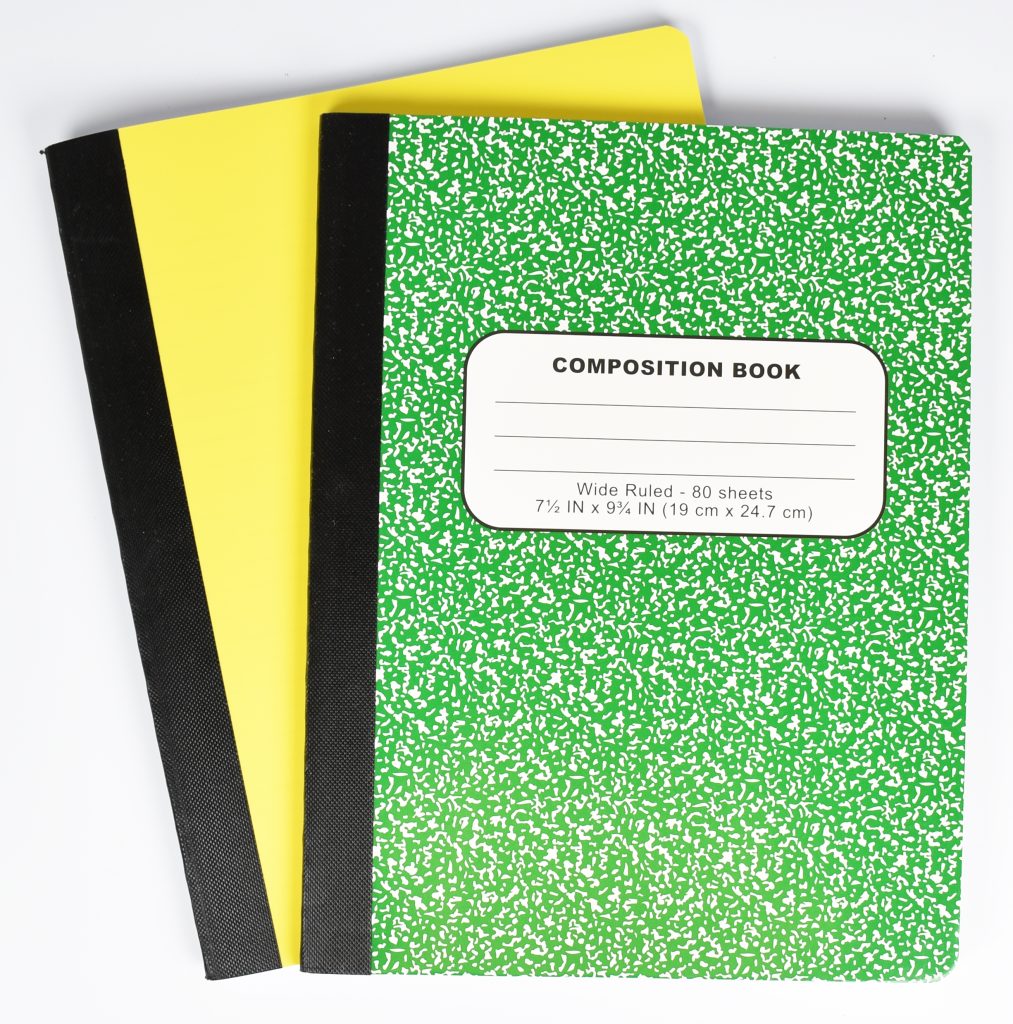
We have found that standard “composition notebooks” work well for science notebooks. They are around 19 cm x 24.7 cm (7.5″ x 9.75″) in size and have around 80 pages (160 sides). Notebooks made with recycled paper are available but are not commonly stocked in big box stores. Wide ruled pages are good for younger students. College ruled pages are good for high school. Notebooks with sewn and taped bindings hold up better than spiral ring bindings. Plain covers are easier for students to personalize with decorations of their own.
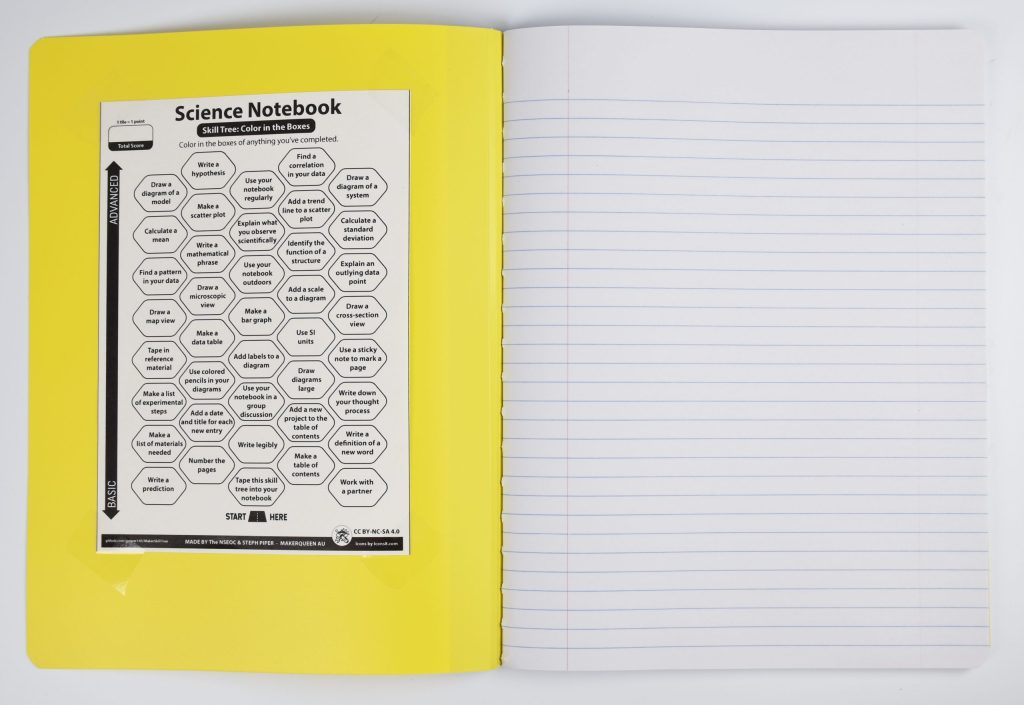
Tape the “Science Notebook Skill Tree” on the inside front cover. You can download a PDF file of this skill tree here.
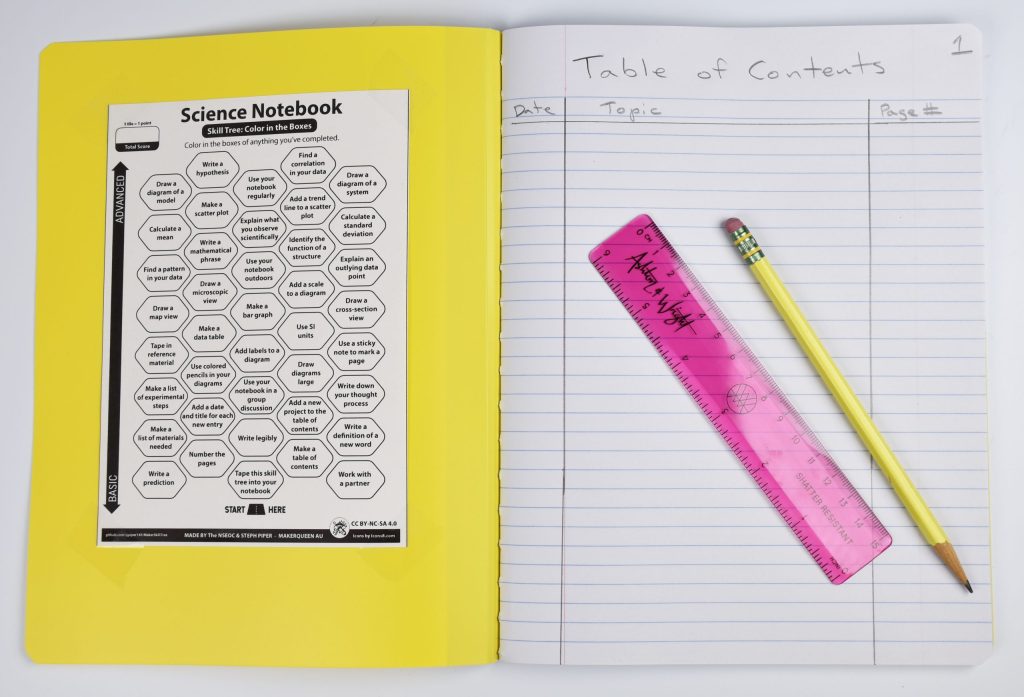
Use the first page for the Table of Contents.
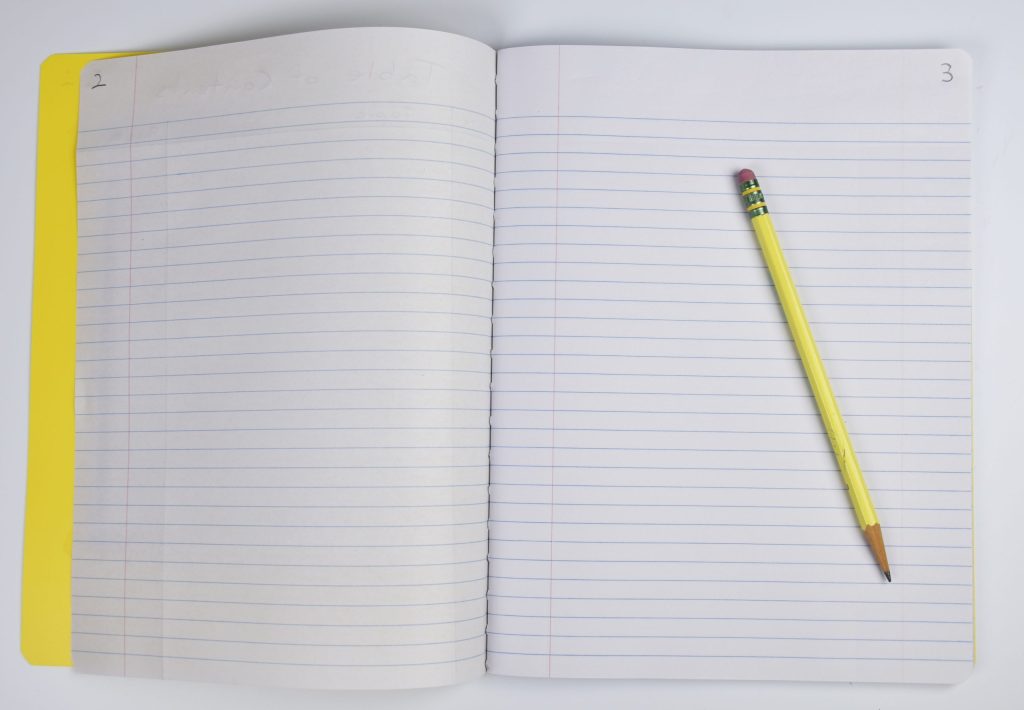
Number the pages. This can be tedious but is important to do.
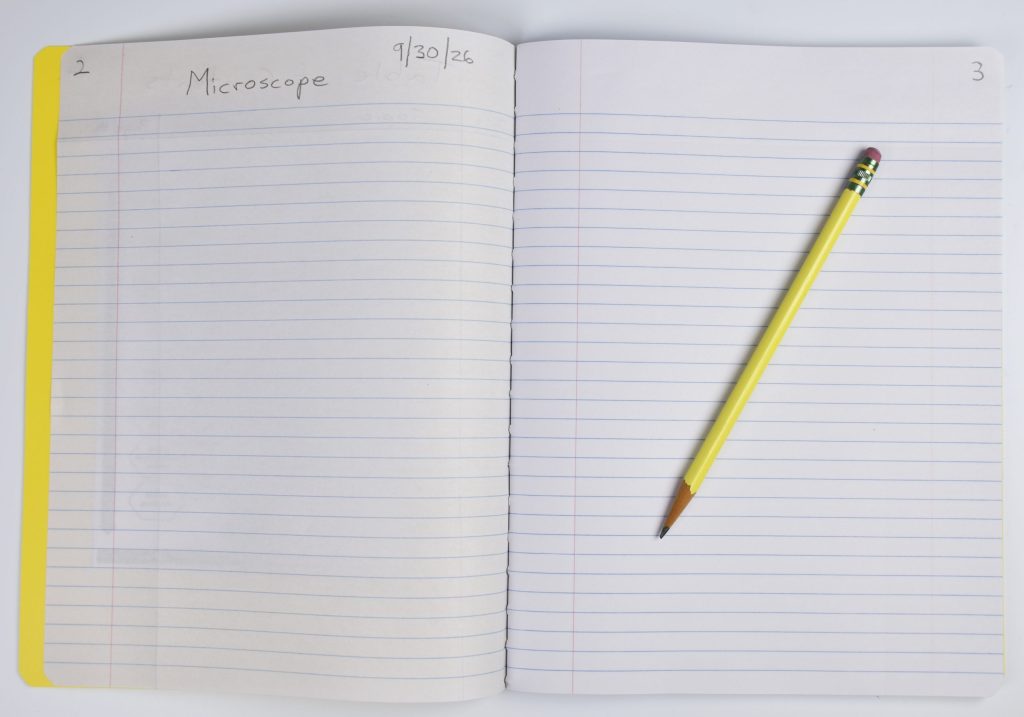
Add a title on your next page or page 3. Add the date.
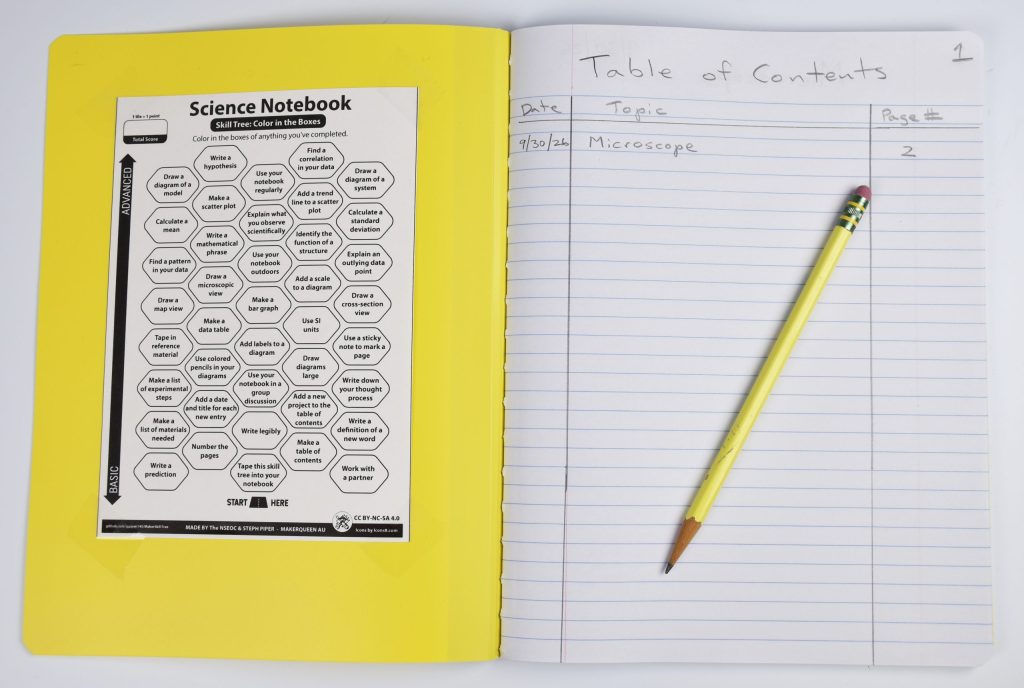
Go back to the Table of Contents and add the date, title of the new topic, and page number.
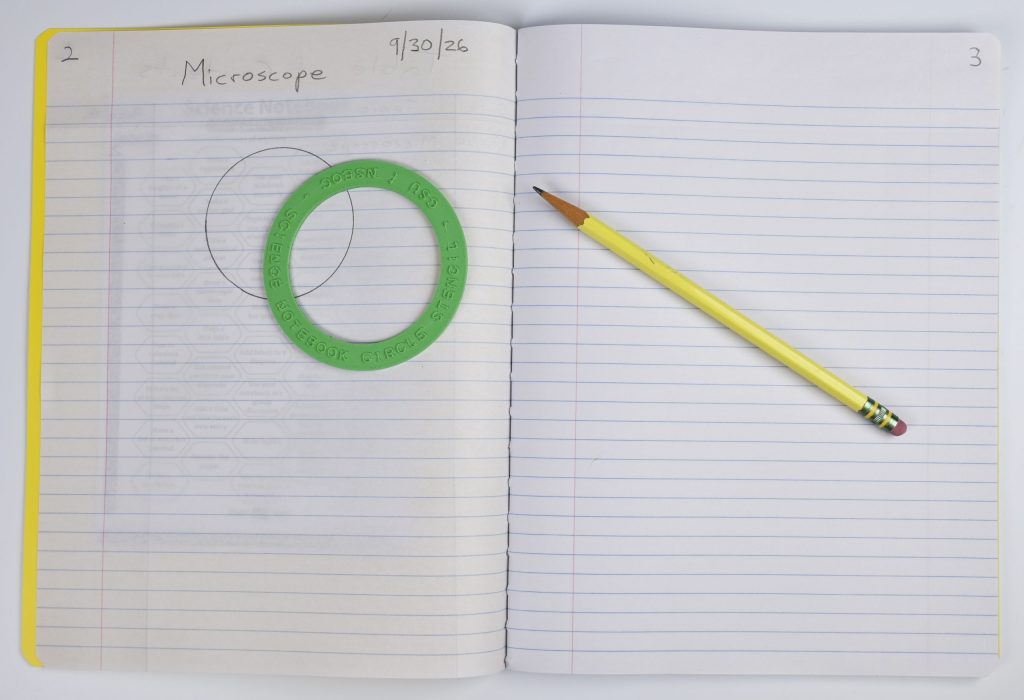
If you are drawing a diagram of something you observe through a microscope, use the “CSU/NSEOC Science Notebook Circle Stencil” to draw a nice clean circle. You can download the 3D printer file (STL format) to print your own stencil here. You can also use this stencil to draw Venn diagrams or things in a Petri dish, etc.
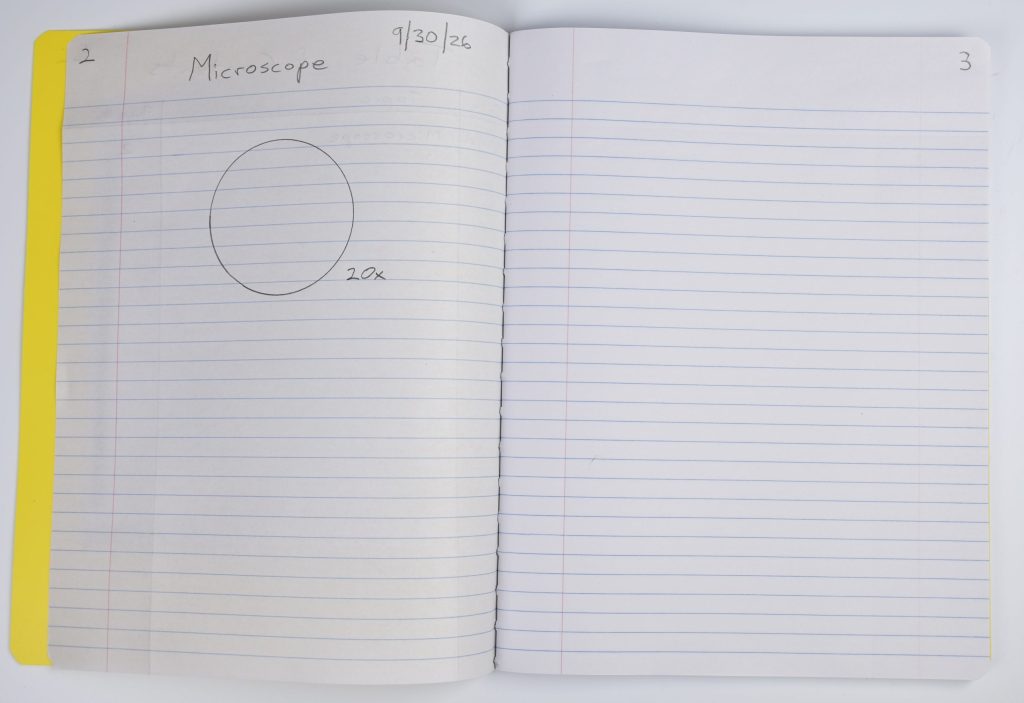
Add the magnification or scale to your diagram.
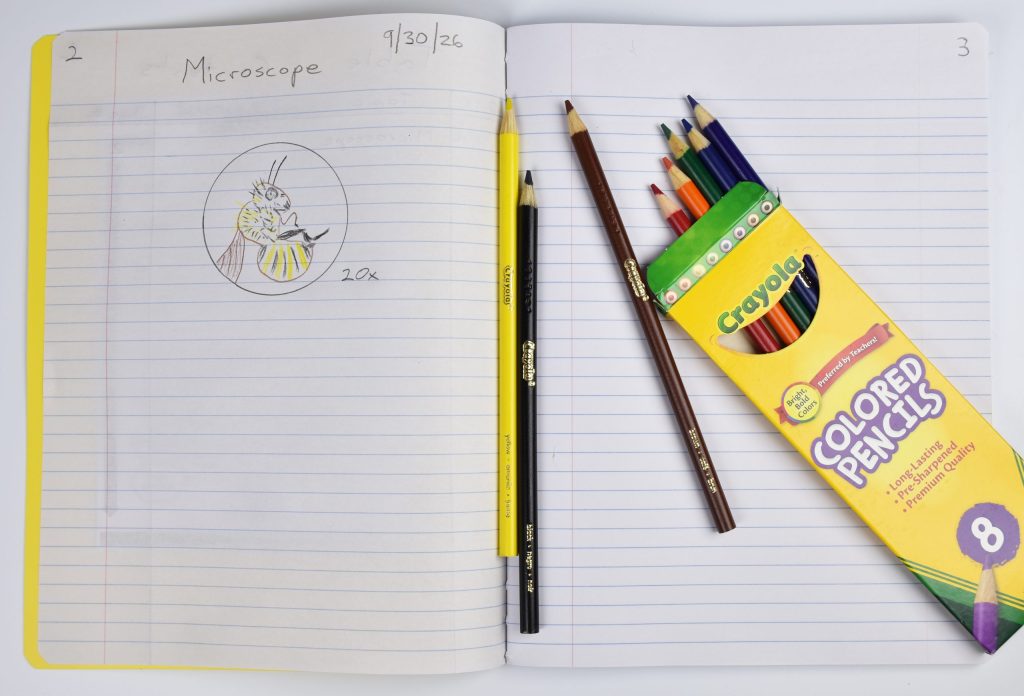
Use colored pencils to draw what you observe through the microscope. Look for details that you can draw.
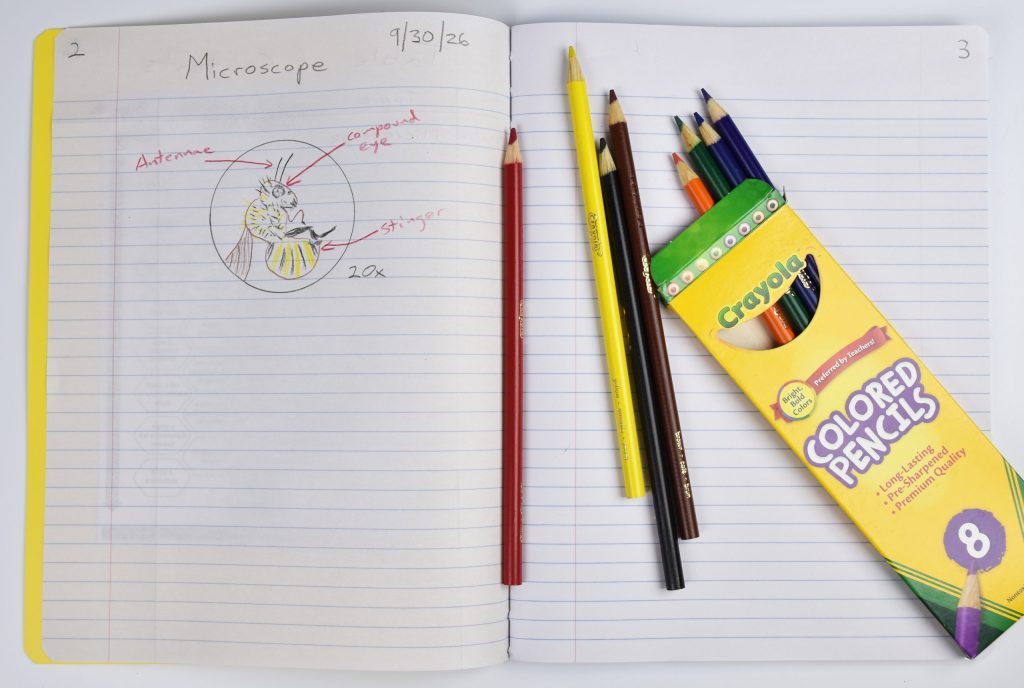
Add labels and arrows to identify different structures that you observe.
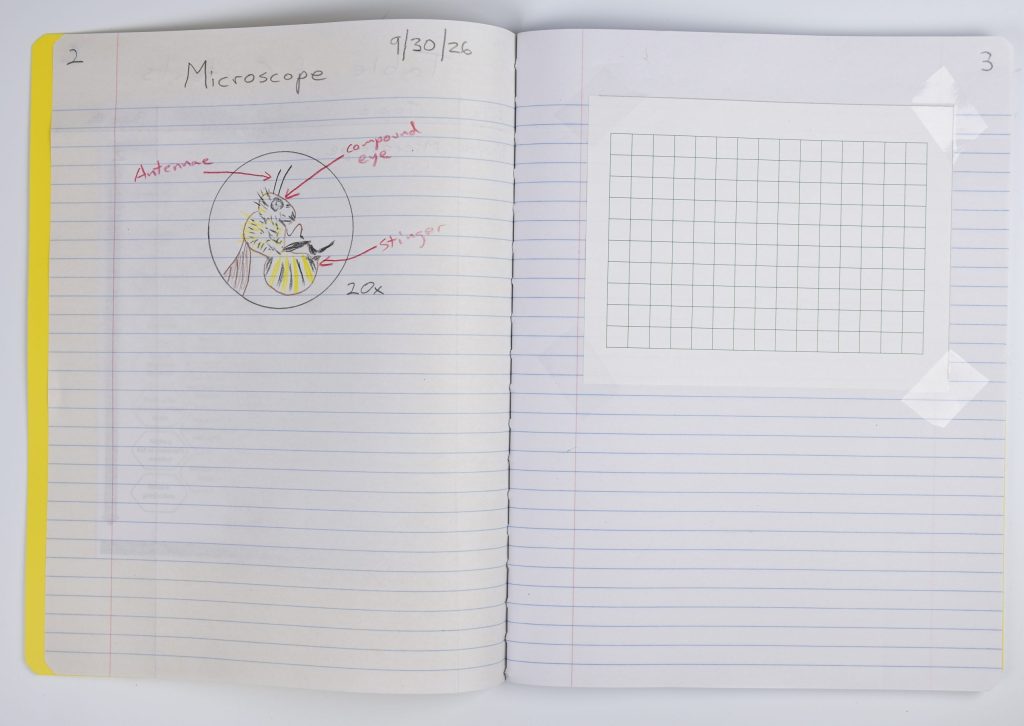
If you need to make a graph, you can tape in sheets of graph paper. Here is a PDF file with four different useful sizes of graph paper you can download and print.
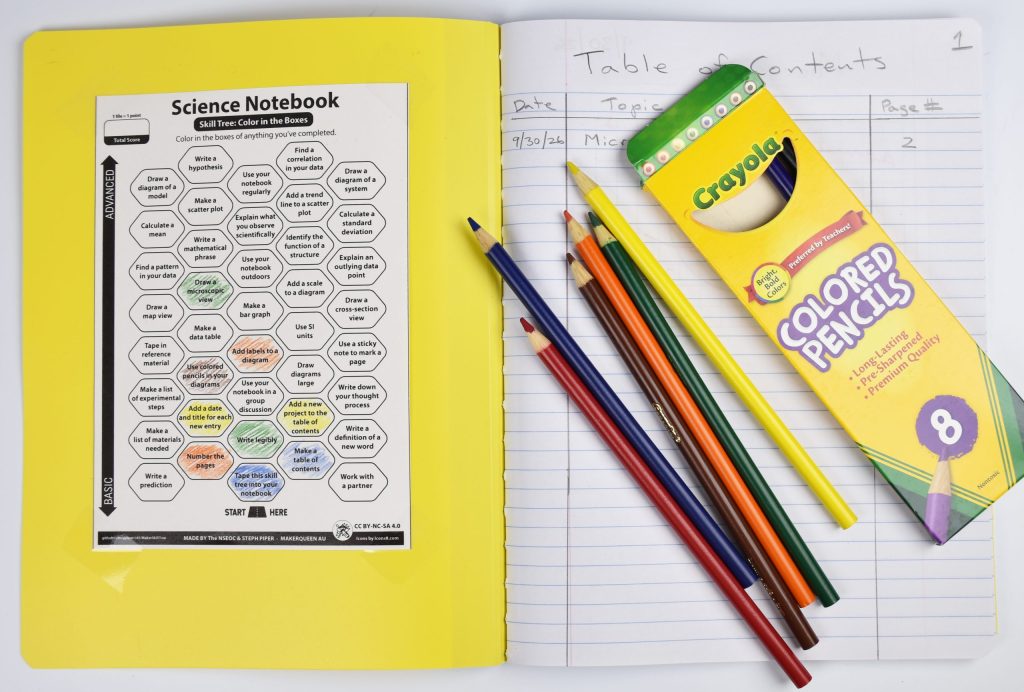
At the end of each activity you do, go back to the “Science Notebook Skill Tree” on the inside front cover and color in any tiles that you did that day!
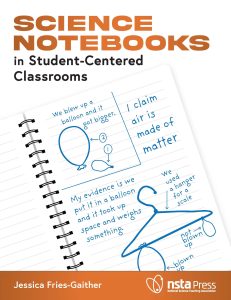
For more on how to use science notebooks, we highly recommend this book:
Fries-Gaither, J., 2022, Science Notebooks in Student-Centered Classrooms, NSTA Press, Arlington, Virginia, 138 p.
How can it be that mathematics, a product of human thought independent of experience, is so admirably adapted to the objects of reality? – Albert Einstein
